
A beautiful wreath begins with the right foundation. Learn how to combine fresh evergreens, natural textures, and simple floral techniques to create your own.
6 min read | Published November 3, 2026 | by Tracee Nichelle
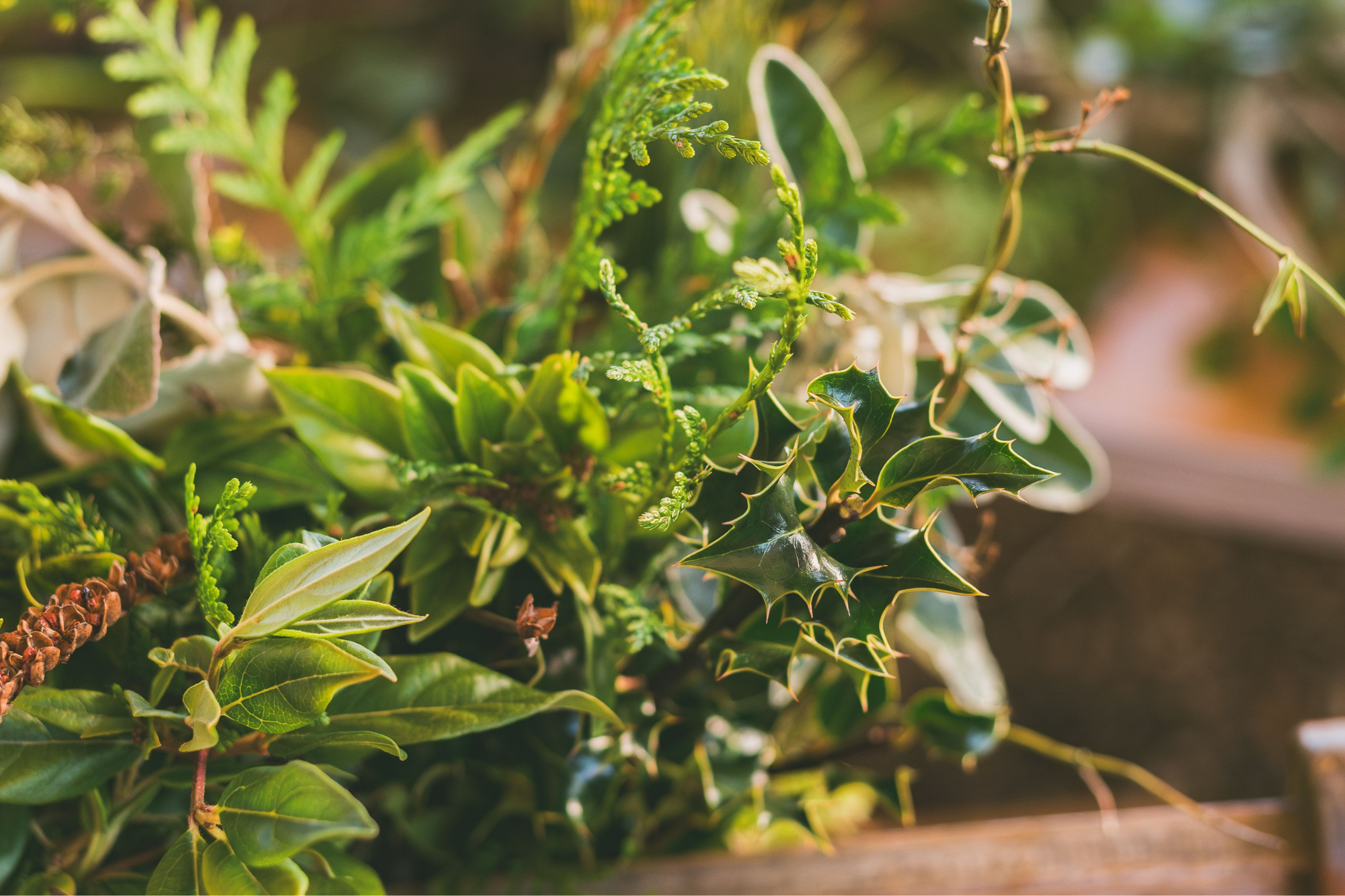
Mixed evergreen wreath base
KEY POINTS
Combining cedar, fir, pine, spruce, and juniper creates a fuller wreath with natural texture, depth, and movement.
Wire frames, grapevine, straw, and natural twig bases provide different foundations for building an evergreen wreath.
A well-made evergreen wreath can stand beautifully on its own or be personalized with seasonal botanicals and decorative accents.
There's something about fresh evergreens that instantly changes the atmosphere of a space. The fragrance of pine, the graceful movement of cedar, and the rich colors and textures of seasonal foliage bring nature a little closer to home.
An evergreen wreath is a beautiful way to welcome the season. Whether displayed on a front door, above a mantel, or in a favorite gathering space, it adds warmth, character, and a natural connection to the outdoors.
Creating your own begins with a few simple materials and an appreciation for the unique qualities of each botanical. With thoughtful layering and a little attention to shape, you can create a wreath that feels naturally abundant and entirely your own.
Choosing the Right Evergreens
The beauty of an evergreen wreath comes from the combination of foliage. Each variety contributes a different texture, shape, and shade of green.
Cedar brings softness and graceful movement. Fir provides fullness and structure, while pine introduces a more relaxed, airy quality. Spruce and juniper can add interesting texture and subtle color variations.
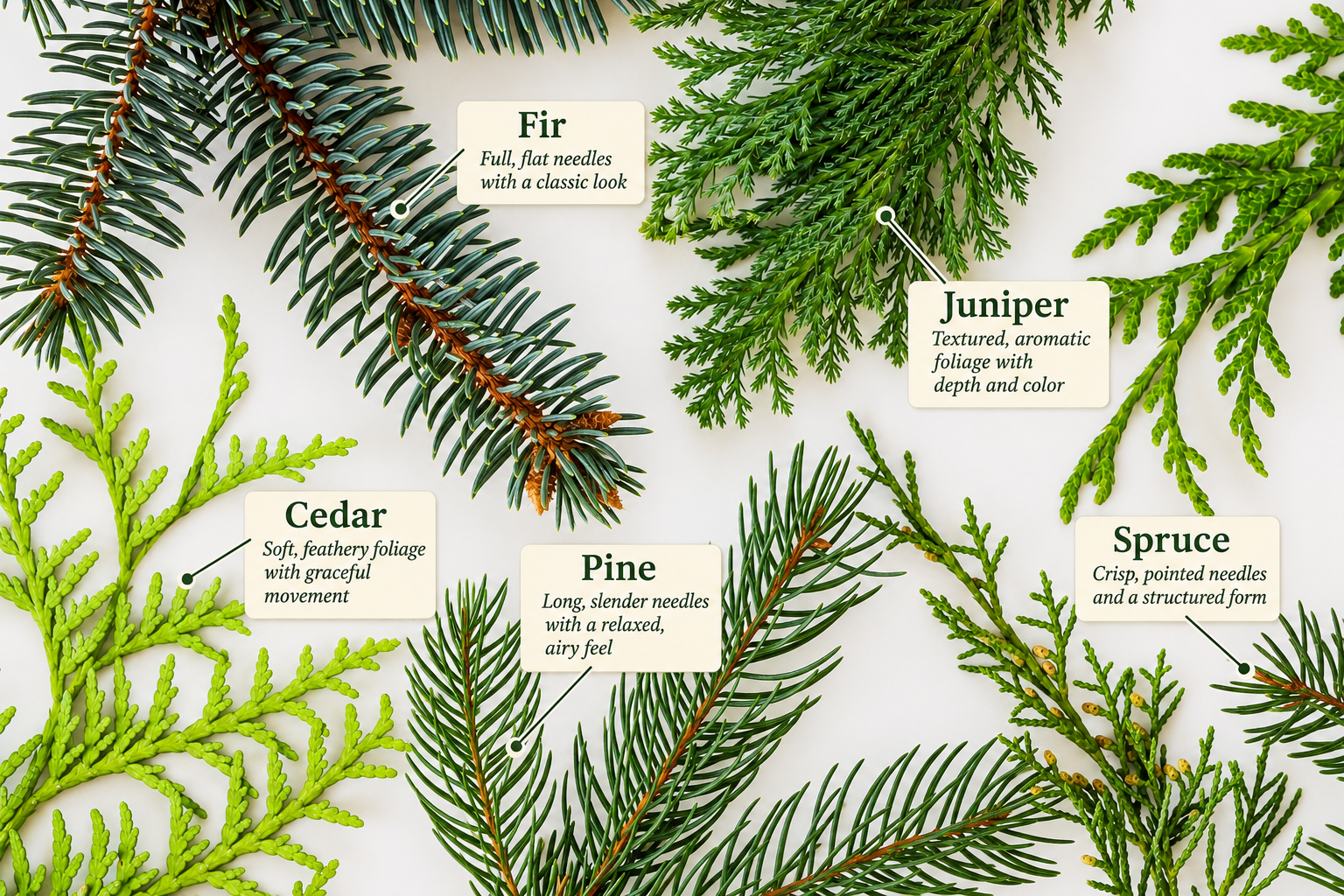
Types of evergreen - Cedar, Fir, Pine, Juniper, Spruce
For a balanced design, start with two or three evergreen varieties. Combining foliage with different shapes and growing habits creates depth without making the wreath feel overly busy.
And don't feel limited to traditional evergreens. Magnolia leaves, rosemary, and other sturdy botanicals can introduce unexpected character.
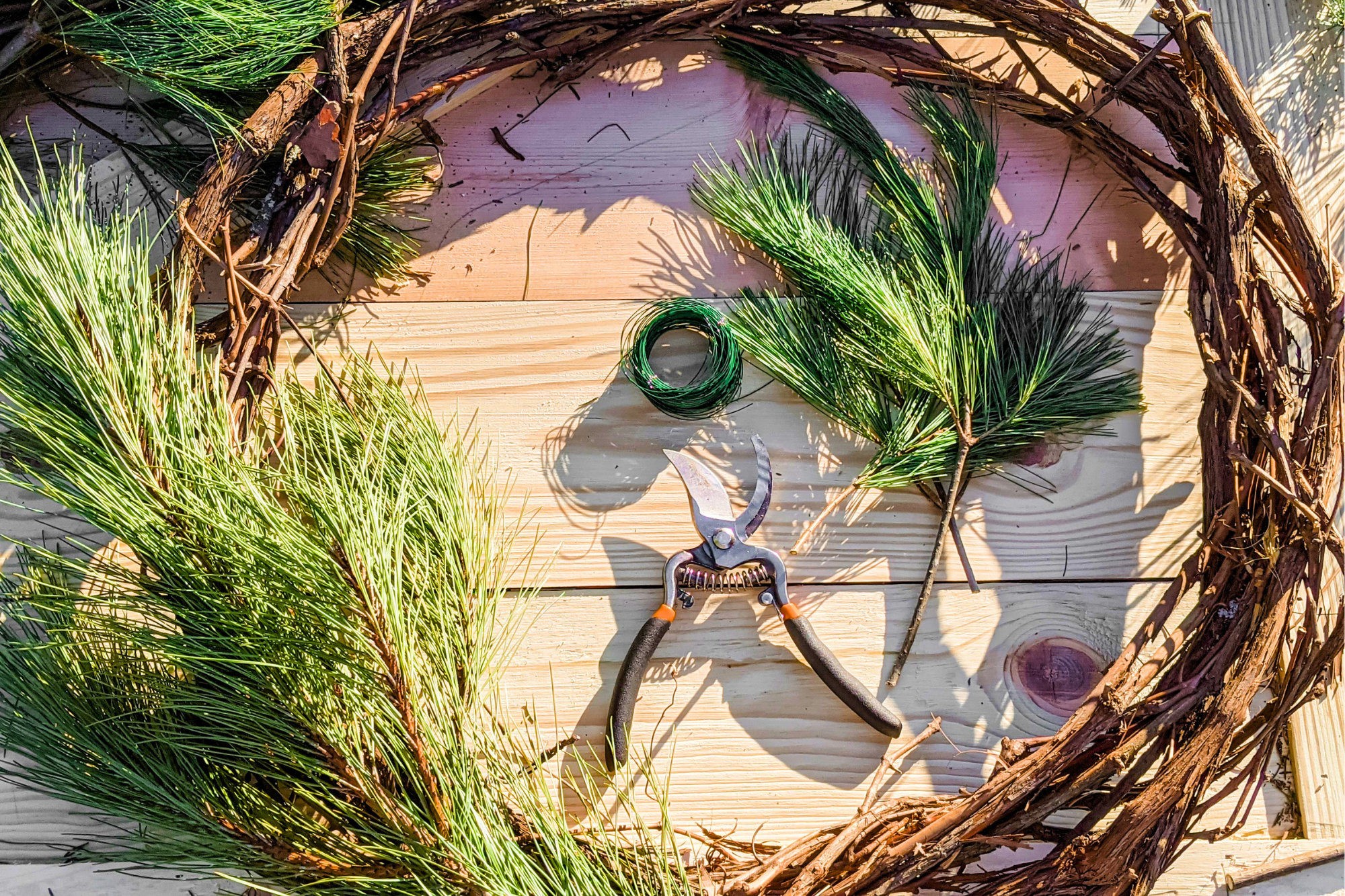
Grapevine wreath base, floral shears and wire
What You'll Need
One of the pleasures of creating an evergreen wreath is working with a variety of natural materials. Each brings something different to the design.
Fresh Evergreens: Choose from fir, cedar, pine, spruce, or juniper. Mixing two or three varieties creates a wonderful combination of textures, colors, and shapes.
Wire Wreath Frame: A 12–16-inch frame is a good starting point, depending on the size you'd like to create.
Green Floral Paddle Wire: Flexible wire, approximately 22–24 gauge, helps secure your greenery while remaining discreet.
Pruning Shears: For cutting and shaping branches.
Garden Gloves: Especially helpful when working with prickly evergreens.
Optional Botanical Accents: Pinecones, berries, dried citrus, magnolia leaves, or other seasonal materials.
A little inspiration: Don't limit yourself to traditional evergreens. Consider incorporating rosemary for fragrance, magnolia for its beautiful two-toned leaves, or other sturdy foliage that complements your surroundings.
Step 1: Prepare Your Evergreens
Begin by cutting your branches into pieces approximately 4–6 inches long. Leave enough stem at the base of each cutting to attach it securely to the frame.
As you work, separate your greenery by variety and begin experimenting with combinations.
Cedar brings softness and movement. Fir offers fullness and structure. Pine adds a more relaxed, airy texture.
Try gathering small bundles of different evergreens together before attaching them to your frame. This makes it easier to distribute your materials evenly and creates a more cohesive design.
Step 2: Build Your Foundation
Secure your floral wire to the wreath frame with several tight wraps.
Place your first bundle of greenery along the frame, with the foliage extending in the direction you want your wreath to flow. Wrap the wire firmly around the stems and frame two or three times to hold everything in place.
Continue adding bundles, overlapping each new section to conceal the stems and wire beneath it.
Work your way around the frame, keeping the greenery moving in the same general direction.
When you reach the starting point, gently lift the first bundle and tuck the final stems beneath it to create a seamless finish.
Design tip: Pay attention to the natural shape of each branch. Rather than forcing every piece into position, let the foliage guide the overall composition.
Step 3: Create Fullness and Texture
Once your frame is covered, place the wreath on a flat surface and look at it as a whole.
Does one side feel heavier than the other? Are there areas that could use more greenery? Does the wreath have a pleasing balance of textures?
Add small bundles where needed, using floral wire to secure them.
We particularly love combining foliage with different growing habits. The soft drape of cedar against the more structured shape of fir creates depth and dimension.
A full wreath doesn't necessarily mean a perfectly round one. Allowing a few branches to extend naturally can give the design a more relaxed, organic character.
Step 4: Refine the Shape
Now it's time to make a few finishing adjustments.
Trim any branches that extend too far beyond the overall shape, but resist the temptation to make everything perfectly symmetrical.
Natural materials have their own character, and those subtle variations are often what make a wreath interesting.
Take a moment to step back and view your work from a distance. Sometimes a small adjustment is all that's needed.
Step 5: Add Your Personal Touch
A beautifully layered evergreen wreath needs very little decoration. The greenery itself offers a wonderful mix of color, texture, and movement.
But if you'd like to introduce a little more personality, consider adding seasonal botanical accents.
Dried orange slices bring warmth and a beautiful contrast to deep green foliage. Pinecones add an earthy texture. Berries introduce color, while a simple ribbon can provide a softer finishing detail.
Use floral wire to secure heavier accents, particularly if your wreath will be displayed outdoors.
You can also leave your wreath completely natural. Sometimes the greenery is enough.
A Gift from the Garden
A handmade wreath is a thoughtful way to share a little of the season with someone else.
We love the idea of keeping the wrapping simple and allowing the natural materials to remain the focus.
Wrapped in Burlap
Use a wide burlap sash to loosely wrap the wreath, finishing with a relaxed knot or bow. The texture of the burlap pairs beautifully with fresh greenery.
A Natural Gift Bag
For smaller wreaths, consider a generously sized burlap bag. Finish with raffia, ribbon, and a handwritten note attached to a simple gift tag.
Beautifully Boxed
Place the wreath in a sturdy box with tissue paper to protect the foliage. A natural ribbon and handwritten message make the presentation feel personal.
If you're giving a fresh wreath as a gift, keep it cool until it's ready to be delivered.
From Our Garden & Gate Designer
A Few Things Worth Knowing
Mix your greenery. Different varieties create a more interesting design. Combine soft, airy foliage with fuller, more structured branches.
Layer thoughtfully. Overlapping greenery adds depth, conceals the frame, and creates a natural sense of abundance.
Choose fresh materials. Look for branches with vibrant color, flexible stems, and foliage that isn't already drying or shedding.
Keep your wreath cool. Fresh evergreens generally last longer in cooler conditions, away from direct sunlight and indoor heat. Lightly misting suitable foliage can help, but avoid soaking decorations or materials that may be damaged by moisture.
Consider its surroundings. Think about where the wreath will hang. The color of your front door, nearby plantings, architectural details, and even the surrounding landscape can inspire your choice of greenery and decorative accents.
Don't overwork it. A beautiful wreath doesn't need to be perfectly symmetrical or filled with decorations. Give the natural materials room to make their own impression.
Bringing Nature Into Everyday Spaces
Creating an evergreen wreath is a simple way to experience the beauty of working with botanicals. It's an opportunity to explore different textures, appreciate the character of natural materials, and create something that feels personal to your space.
At Garden & Gate, we believe botanical design is about more than decoration. It's about bringing nature into the places we live, gather, and experience every day.
Whether it's a simple evergreen wreath or a more elaborate seasonal installation, thoughtful design can change how a space looks, feels, and welcomes us.
Nature, Artfully Composed.
Discover more botanical inspiration and seasonal design from Garden & Gate.